EV, Plug-in Hybrid or Petrol in Christmas Traffic? What Actually Matters for Filipino Drivers
Christmas traffic in Metro Manila typically rises 10 to 25 percent. This guide looks at how battery-electric BYDs and plug-in hybrids cope with long jams and provincial trips, separating BYD's claims from independent views, and helps you choose by your own route and charging access.
Christmas means longer jams and more provincial trips. People often ask whether an EV or a plug-in hybrid is better for that. The honest answer is that it depends on your route, your charging access and how far you drive, so this guide sets out what is known and where the evidence is thin.
Independence notice: BYDPH.org is an independent community and is not affiliated with or endorsed by BYD or its Philippine distributor.
The short version
- Short city runs with home charging suit a plug-in hybrid or an EV, since both can run on electricity.
- Long provincial trips are easier with a plug-in hybrid's combined range, while an EV needs a charging plan.
- Heavy traffic by itself is not a clear win for either type. We found no Philippine test data on energy use in jams.
What Christmas traffic looks like
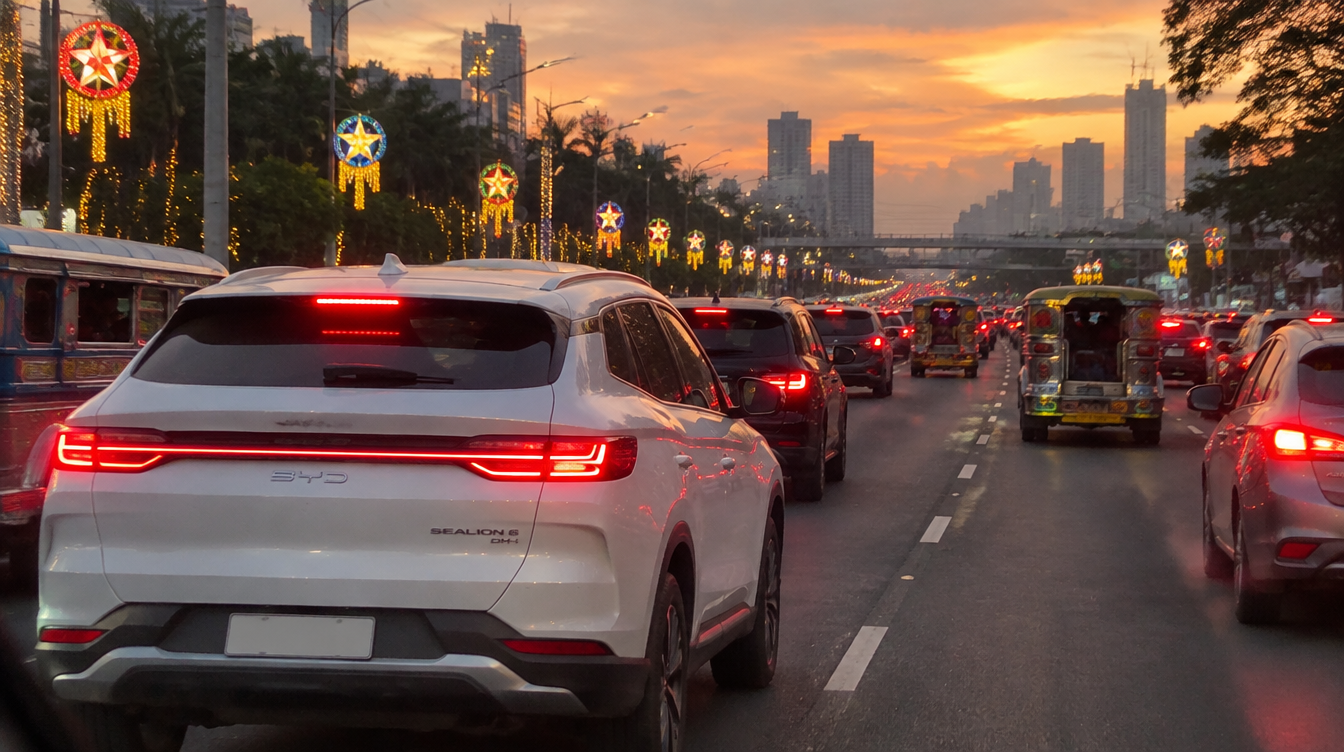
MMDA says the Christmas season brings a 10 to 25 percent rise in vehicle volume on Metro Manila roads. For 2025 it ran measures from 17 November to 25 December, including suspended roadworks and mall delivery limits, and let provincial buses use EDSA around the clock from 24 December to 2 January. Those are the 2025 measures. Check MMDA's announcement for this year's rules before you plan a trip.
Plug-in hybrids (DM-i) in slow traffic
BYD sells several plug-in hybrids in the Philippines. Zigwheels' October 2025 list gives these electric-only ranges: Tang DM-i 110 km, Sealion 6 DM-i 105 km, Seal 5 DM-i 115 km, Sealion 5 DM-i 71 km and Shark 6 DMO 100 km. AutoDeal lists the Atto 2 DM-i at about 45 km (NEDC) with a 7.9 kWh battery, 3.3 kW AC charging and about two hours for a 15 to 100 percent charge. These are claimed ranges, and real-world results vary with traffic, air-conditioning and driving style.
BYD Cars Philippines says you are never penalized for not charging, because the engine charges the battery, and that stop-and-go traffic suits electric drive. That is the company's own statement, not an independent test.
The plus for a holiday: when the battery runs low you can keep driving and refuel at any station, and BYD and Zigwheels cite combined ranges of roughly 1,000 km or more for several models. The catch is that the electric benefit depends on starting each day with a charged battery. Once it is depleted, the car relies on the engine.
Battery EVs in slow traffic
BYD Cars Philippines describes the Atto 2 EV as having a claimed range of up to 380 km (Tribune, August 2026). A battery EV does not need to burn fuel while sitting in a jam, but air-conditioning and other accessories still draw from the battery. That is editorial analysis, not a measured figure for any BYD model.
Yugatech's explainer says battery EVs suit a structured commute within the city, and that longer trips need planned charging stops. The charging network is the main limit. Expressway.PH's BYD listing shows only six BYD-linked stations by city, two of them DC fast chargers (Quezon City and Angeles), and it says the data comes from OpenChargeMap and should be confirmed in the BYD app. Public networks are larger than that list, but you should still verify stations before you rely on them.
The skeptical view
A 2019 opinion piece from Philkotse argued that EVs and plug-in hybrids do not suit Metro Manila, citing limited regenerative braking in stop-and-go traffic, petrol use once a plug-in hybrid's battery is low, and thin charging infrastructure. It cites no data, and it is years old, so treat it as an opinion rather than a finding. Yugatech makes a related point that regenerative braking returns only a small amount of energy in plug-in hybrids. Both are reminders not to expect miracles from braking energy in a jam.
A practical holiday checklist
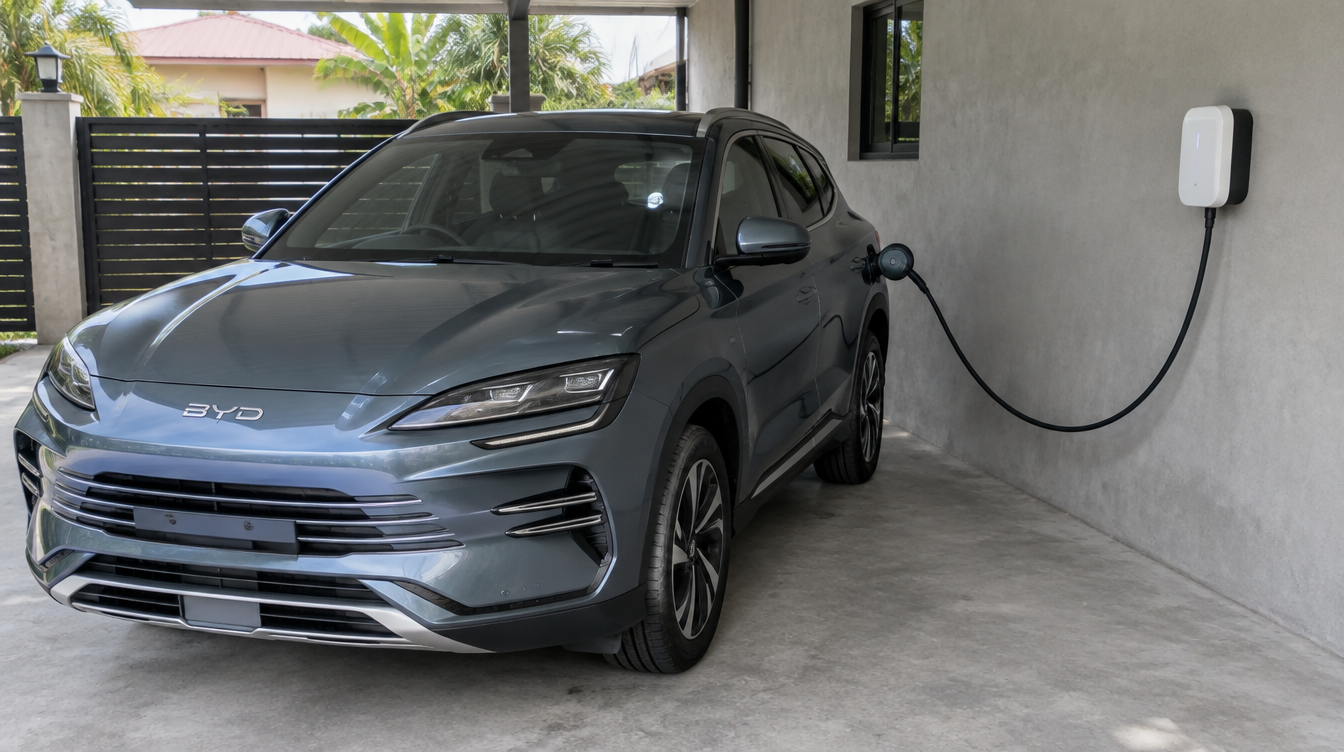
- Start full. Charge at home before you leave so a plug-in hybrid begins on electricity and an EV has its full range.
- Plan charging for long trips. Check where chargers are and which connector your car uses. See our guides to CCS2 fast charging and charging on remote trips.
- Do not improvise. Do not use extension cords or unapproved adapters to charge. Follow your owner manual.
- Budget for holiday crowds. Mall chargers may be busy. We have no data on holiday queues, so have a backup.
- Confirm your model's range and charging details with your dealer. Our guides to the Atto 2 EV and DM-i and plug-in hybrid wall chargers may help.
Owner experience
[Placeholder: a verified owner may add their own holiday-traffic experience with an EV or plug-in hybrid. Owner reports should be labelled as community-reported, not confirmed. Not written by the drafting assistant.]
Where to learn more
- Zigwheels: MMDA traffic measures for Christmas 2025
- Philstar: MMDA Yule traffic measures
- BYD Cars Philippines: Super DM-i charging and range
- Zigwheels: BYD's hybrid offerings in the Philippines
- Tribune: BYD Atto 2 offers two paths to electric driving
- Yugatech: BEV, hybrid and PHEV explainer
- Your BYD owner manual and your authorized BYD dealer
Last checked: 4 November 2026. Ranges, prices and traffic rules change.
Please read this as one informed perspective, not the final word. This article shares community research and experience. It may be incomplete or out of date, and it is not official guidance from BYD or its distributors. Before you act on it, check your owner's manual or an authorized service center, especially on safety, warranty and high-voltage matters.