What Is the BYD Blade Battery? A Simple Guide for Filipino BYD Owners
The BYD Blade Battery is an LFP battery built from long, thin, flat cells packed straight into the pack. Here is what that means, what BYD claims, which Philippine models use it, and how the warranty is described locally.
The BYD Blade Battery is one of the most important technologies behind BYD electric and plug-in hybrid vehicles. It is designed to provide a balance of safety, durability, energy storage efficiency, and vehicle performance.
If you own a BYD Dolphin, Atto 3, Seal, or a compatible DM-i model, understanding how the Blade Battery works can help you make better decisions about charging, maintenance, and long-term vehicle ownership.
BYDPH.org is an independent community and is not affiliated with BYD or its Philippine distributor. This guide is general information. Your owner's manual and an authorized service center are the final word on your car.
The short version
- The Blade Battery is BYD's own battery design. It uses lithium iron phosphate (LFP) chemistry.
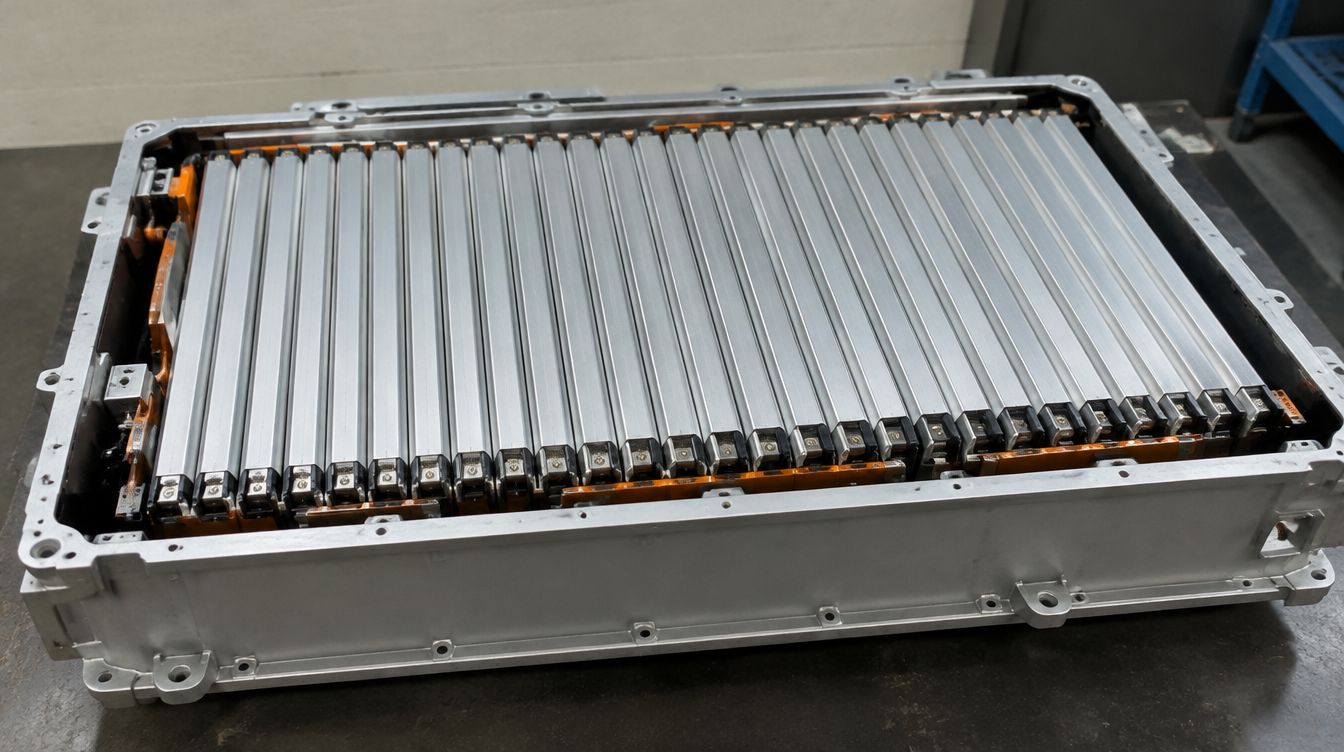
- Its cells are long, thin and flat, like blades, and they are packed directly into the battery pack instead of being grouped into modules first.
- BYD says this layout makes better use of space and helps safety. Many of the numbers below are BYD's own claims, and we label them that way.
- It is used in BYD models sold in the Philippines, but battery size, range and warranty terms differ by model. Check your own variant.
What "Blade" actually means
Three terms get mixed up, so here is how they fit together.
- LFP describes the chemistry inside the cell (lithium iron phosphate).
- Prismatic describes the cell shape: a flat, rectangular cell instead of a round one.
- Cell-to-pack describes how the cells are installed: straight into the pack, without separate modules.
An LFP battery is not automatically a Blade Battery. A Blade cell is a very long, flat prismatic cell. Reports describe cells of roughly 96 cm in length. They are laid side by side across the pack in an array, and they also help hold the pack's structure together.
Why BYD designed it this way
According to BYD's launch material, as reported by InsideEVs, a conventional battery pack gives only part of its volume to cells, because modules and housings take up room. BYD says cell-to-pack arrangement raises the share of the pack that is actual cells, and it puts the space-use improvement at over 50% compared with conventional LFP block batteries. This is a BYD claim, not an independent measurement.
LFP has traditionally stored less energy for its size than other lithium chemistries. The Blade layout is BYD's way of making up some of that gap while keeping LFP's reputation for stability.
Safety claims and tests
BYD's main safety message is about heat. These are BYD-reported results:
- In a nail penetration test, BYD says the Blade cell gave off neither smoke nor fire, and its surface temperature reached only 30 to 60°C.
- Under the same test, BYD says a ternary lithium battery exceeded 500°C and burned violently, and a conventional LFP block battery reached 200 to 400°C without open flame.
- BYD also reports the battery passing crushing, bending, heating in a furnace to 300°C and overcharging by 260% without fire or explosion.
Philippine press has seen the demonstration. A Manila Bulletin writer described a live nail test at the BYD Museum with similar results. These are manufacturer tests, not a guarantee for every accident. No battery is risk-free, so the usual rules still apply: do not use damaged charging gear, and have any accident-damaged vehicle checked by an authorized service center.
Which Philippine BYD models use it
Philippine reports and BYD Cars Philippines material say:
- The Atto 3 and Dolphin both use the Blade Battery.
- The Atto 3 has been offered with a 49.9 kWh and a 60.5 kWh battery, depending on variant.
- All Atto 2 variants use the Blade Battery, according to a news report on the Atto 2 and Seal 5 DM-i launch.
The Seal and the DM-i models are also described by BYD as Blade Battery vehicles. Always check the exact battery size, range and charging figures for your variant, because they differ between models and model years.
Warranty: what has been published locally
BYD Cars Philippines, distributed by ACMobility, has been reported to cover its EV lineup with:
- a 6-year or 150,000 km vehicle warranty;
- an 8-year or 160,000 km battery pack warranty;
- an 8-year or 150,000 km electric motor warranty.
For the Atto 2, a news report gives the Blade Battery warranty as 8 years or 160,000 km. One BYD Cars Philippines blog page states an 8-year or 150,000 km battery warranty instead, so the figures are not consistent across sources. Warranty terms can differ by model and change over time, so read your own warranty booklet or ask your dealer. We cannot confirm from these sources whether a minimum battery health level applies in the Philippines.
How long will it last?
BYD's European pages say the Blade Battery supports more than 5,000 charge and discharge cycles, while its Dutch page says more than 3,000 cycles. A BYD Cars Philippines blog uses about 3,000 cycles. The number depends on the source and market, and real life depends on use, charging habits and climate. Treat it as an indication of design life, not a promise.
Newer generation
In 2026, BYD announced a second-generation Blade Battery, which it says raises energy density by 5% over the first generation and improves charging speed. We do not have confirmation of which Philippine models will get it or when. Your current car has the battery described in its own specifications.
What this means for you
- Charging: follow the charging instructions in your owner's manual and use quality, undamaged charging equipment.
- Fast charging: the Blade Battery does not remove the need to follow your model's charging limits. Check the manual for your variant.
- Maintenance: never open, repair or modify the battery or any high-voltage part yourself. Use an authorized service center.
- After a crash or underbody impact: have the car inspected, even if it looks fine.
- Buying used or comparing models: ask which battery size and variant the car has, and check the warranty terms in writing.
Owner experience
This guide does not rely on individual owner stories. If you have experience with battery range, charging or warranty service on your car, treat it as your own experience, and compare it against the manual and your dealer's advice.
Last checked: 2 November 2026. Specifications, warranty terms and model availability change, so confirm with your authorized dealer.
Where to learn more
- InsideEVs: BYD launches the Blade Battery
- Manila Bulletin: The BYD Blade Battery
- ZigWheels PH: Atto3 powered by the Blade Battery
- AutoCar PH: BYD Cars Philippines warranty and test drive festival
- Newsbytes PH: Atto 2 and Seal 5 DM-i launch
- ZigWheels PH: BYD second-generation Blade Battery
- BYD Cars Philippines: EV myths
- BYD Europe: Blade Battery
- EVKX: Blade Battery glossary
Please read this as one informed perspective, not the final word. This article shares community research and experience. It may be incomplete or out of date, and it is not official guidance from BYD or its distributors. Before you act on it, check your owner's manual or an authorized service center, especially on safety, warranty and high-voltage matters.