Portable EV Charger Safety for BYD Owners: Why a Properly Grounded Outlet Matters
The portable charger that comes with select BYD models is only as safe as the household socket behind it. This short guide covers what BYD's manual says, why grounding matters, simple checks before each use, and when to stop and call an electrician.
The portable charger that comes with select BYD models plugs into an ordinary household socket. It is convenient, but it is only as safe as the socket and wiring behind it.
Independence notice: BYDPH.org is an independent community and is not affiliated with or endorsed by BYD or its Philippine distributor.
What BYD's manual says
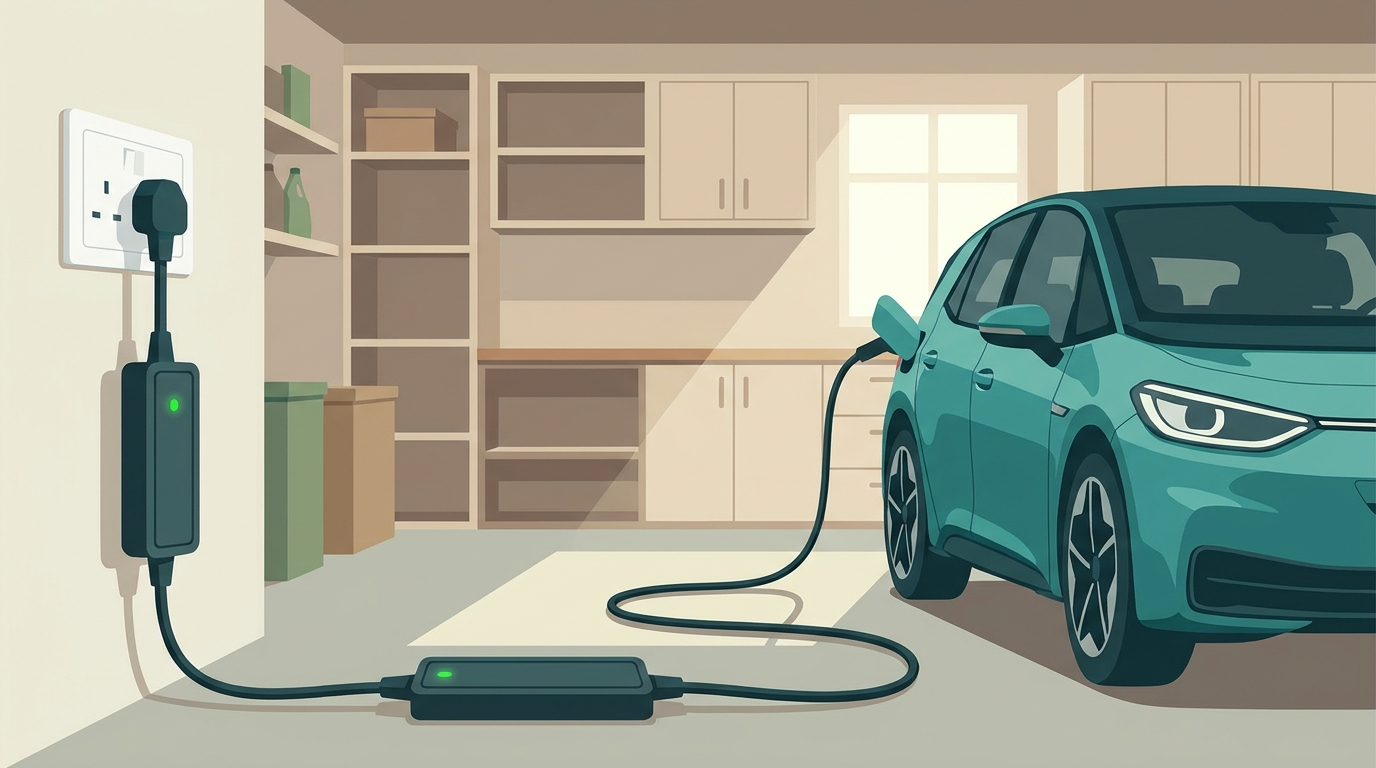
BYD Cars Philippines says free portable and wall chargers come with the vehicle for select models. For the portable (Mode 2) cable, the 2023 BYD Seal owner's manual says to plug it into a household socket that meets local standards. This helps avoid damaged wiring or tripped breakers during high-power charging.
The same manual says not to charge if the housing is cracked, the cable is worn, the plug is rusted, or the connection is loose. It also advises keeping the equipment out of the trunk, away from the tires and the front of the vehicle, and never pulling it by the cable. Wording can differ by model, so check your own owner manual.
Why grounding matters
Grounding, also called earthing, gives a fault current a safe path away, instead of passing through a person. Portable chargers rely on that connection. A Singapore guide notes that many portable chargers refuse to start when the earth connection is missing or poor.
Treat a refusal to start as a warning, not an obstacle. Do not try to get around a charger's safety checks. Philippine electrical rules for installations are set out in the Philippine Electrical Code, and outlet or wiring work should be done by a licensed electrician.
Quick checks before each use
- Look at the socket. Cracks, a loose fit, or discoloured pin holes mean do not use it.
- Plug in directly. Avoid extension cords, multi-plug adapters and power strips, which can overheat under a long, steady load.
- Keep it dry and raised. Do not leave the control box where water could reach it, and avoid charging outdoors in heavy rain.
- Feel the plug early. In the first part of a session, check that the plug and socket are not unusually hot. If they are hot, or you smell burning, stop and unplug.
Stop and get help if
- the breaker trips repeatedly
- the charger or car shows a ground or earth fault
- the socket or cable looks damaged
Have a licensed electrician check the wiring and earth connection before you charge again. For faults in the car or charger, contact an authorized BYD service center.
Buy certified equipment
The Department of Trade and Industry's Bureau of Philippine Standards lists EV charging equipment under mandatory product certification, in effect since 21 July 2023. If you buy a charger, ask the seller whether it is certified, and avoid unlabelled products.
Owner experience
[Placeholder: a verified owner may add their own experience with portable charger use. Not written by the drafting assistant.]
Where to learn more
- BYD Seal 2023 owner's manual: Charging (ManualsLib)
- BYD Cars Philippines: Go Electric
- DTI Bureau of Philippine Standards: EV charging equipment
- Manila Bulletin: How to safely charge your EV in unpredictable weather
- Lazada Automotive (Singapore): EV charging alternatives
Last checked: 2 November 2026. Confirm with BYD or a licensed electrician.
Please read this as one informed perspective, not the final word. This article shares community research and experience. It may be incomplete or out of date, and it is not official guidance from BYD or its distributors. Before you act on it, check your owner's manual or an authorized service center, especially on safety, warranty and high-voltage matters.