EV Charging Rules in the Philippines: What the DOE's Plans Mean for Condo and Home Owners
The Electric Vehicle Industry Act already requires larger buildings to reserve parking for EV charging, and the DOE has been preparing a circular on when chargers must be installed. This guide explains what is law, what was still a draft in recent reports, and what condo and home owners can do now.
The Department of Energy (DOE) has been preparing a circular that would decide when buildings must install EV chargers, but recent reports describe it as not yet issued. This guide explains what is already law, what was still a draft in the reports we found, and what BYD owners in condos or houses can do now.
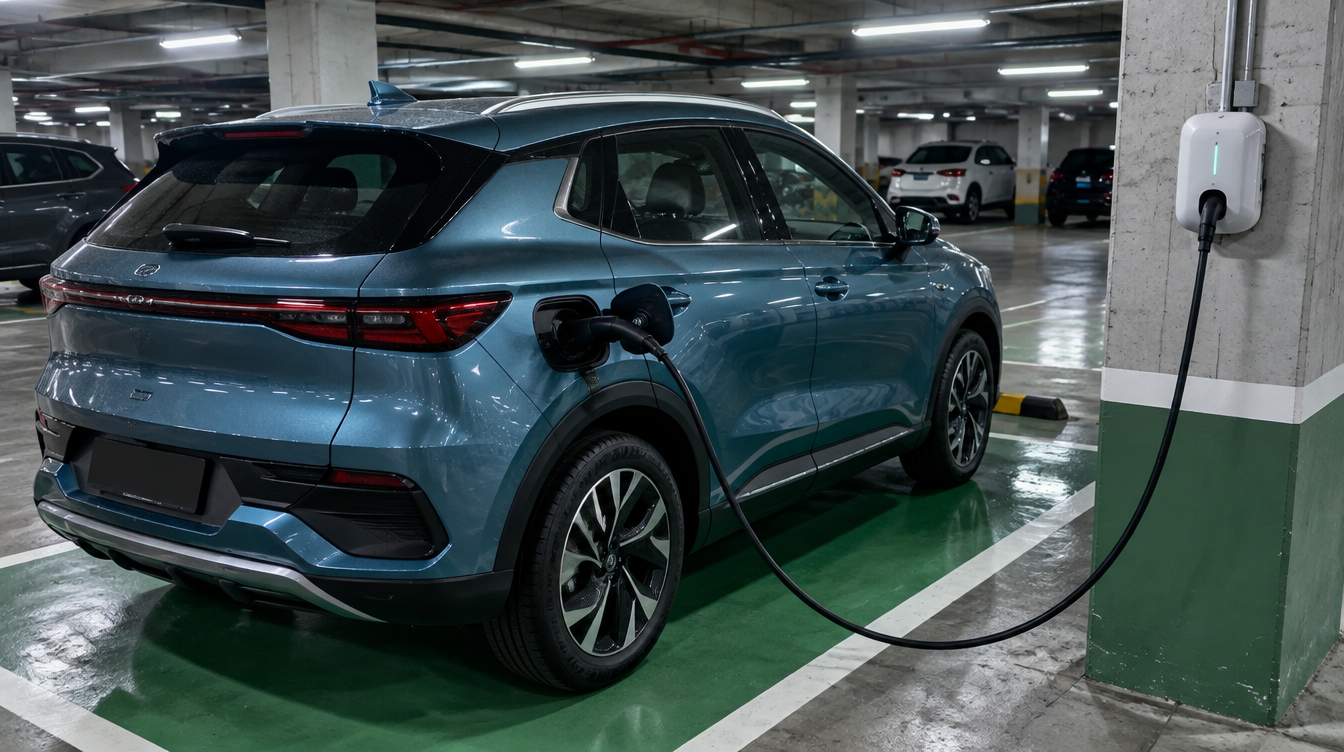
Illustration only. Actual vehicle appearance, features, and specifications may vary.
What the law already says
Republic Act 11697, the Electric Vehicle Industry Development Act, is anchored by Section 17 in Philippine press coverage. As reported, public and private buildings with at least 20 parking spaces must reserve 5 percent of them for EV charging stations. Coverage of the law also says new buildings are expected to designate EV parking, and the DOE's draft circular would deal with when working chargers must be installed.
What the DOE circular is expected to do
In late August 2026, DOE officials said a circular was coming that would guide installation, especially for older buildings. A DOE bureau director said it had not been issued because of technical considerations, for example in older condominiums where the electrical system may not take a simple retrofit. Reports say the circular will include provisions so retrofits do not overload an existing building's wiring.
Reports since then are not consistent:
- A mid-September 2026 radio report quotes a DOE undersecretary describing a plan for at least 10 percent of parking slots in condominiums and similar properties to have registered, inspected charging stations. That is different from the 5 percent figure in the law as reported.
- A Philippine contractor's guide said it found no issued circular as of October 3, 2026.
- A commentary piece in October described the available draft as covering condominiums, apartments, offices, schools, hotels and other property types, and proposing a two-year compliance period counted from the final circular. It also stressed that the draft was unsigned.
We have not found an official DOE publication of a final circular. The DOE's issuances page should be checked before you plan around any percentage or deadline.
Why this matters for BYD owners
- Public network. The DOE reports about 1,600 registered public charging stations, mostly in Luzon, and aims for 7,000 by the end of 2028.
- Condo owners. A building rule on charger bays does not mean your bay will have a charger or a socket. Whether you can install your own charger is usually decided by your building's management or condo corporation, not by the DOE.
- Home owners. The rules on charging stations do not replace the need for safe wiring at home.
What you can do now
- Read your car's charging guidance. BYD and other makers say to plug the portable charger straight into a properly grounded socket. See our guides on checking the outlet first and why not to use an extension cord.
- Ask building management in writing whether charging at your bay is allowed, who pays for the electricity and any wiring, and whether the building has a plan for charger bays.
- Have a licensed electrician assess your supply. One Philippine contractor says a typical 7 kW charger needs its own circuit with ground-fault protection and plans signed by a professional electrical engineer. Ask your electrician what applies to your building.
- Ask your dealer what charger and installation your purchase includes. Do not assume a charger can be installed in a condo bay.
- Keep records of any approvals and permits for the installation.
What we do not know
- Whether the final circular will use 5 percent, 10 percent or another figure, and when buildings must comply.
- How the circular will treat existing condominiums in practice.
- How local governments will handle permits, which industry reports describe as uneven.
Where to learn more
- Philstar: DOE to require EV charging stations in parking lots
- Parking Network: Philippines moves to expand EV charging through parking requirements
- Top Gear Philippines: the DOE's incoming mandate
- DZRH: DOE eyes mandatory EV charging stations in buildings
- Aedo Construction: EV charger installation in the Philippines
- Gulf News: Philippines EV charging snags and red tape
BYDPH.org is independent and not affiliated with BYD or the DOE. This article is general information, not legal or electrical advice. Last checked: 3 November 2026.
Please read this as one informed perspective, not the final word. This article shares community research and experience. It may be incomplete or out of date, and it is not official guidance from BYD or its distributors. Before you act on it, check your owner's manual or an authorized service center, especially on safety, warranty and high-voltage matters.