Charging a BYD From a 220V Wall Outlet in the Philippines: What to Check First
Every BYD can charge from a household outlet with its portable cable, but it is slow and sustained, and many Philippine outlets are older two-prong types. Here is what to check about the socket before you plug in, and when to call an electrician.
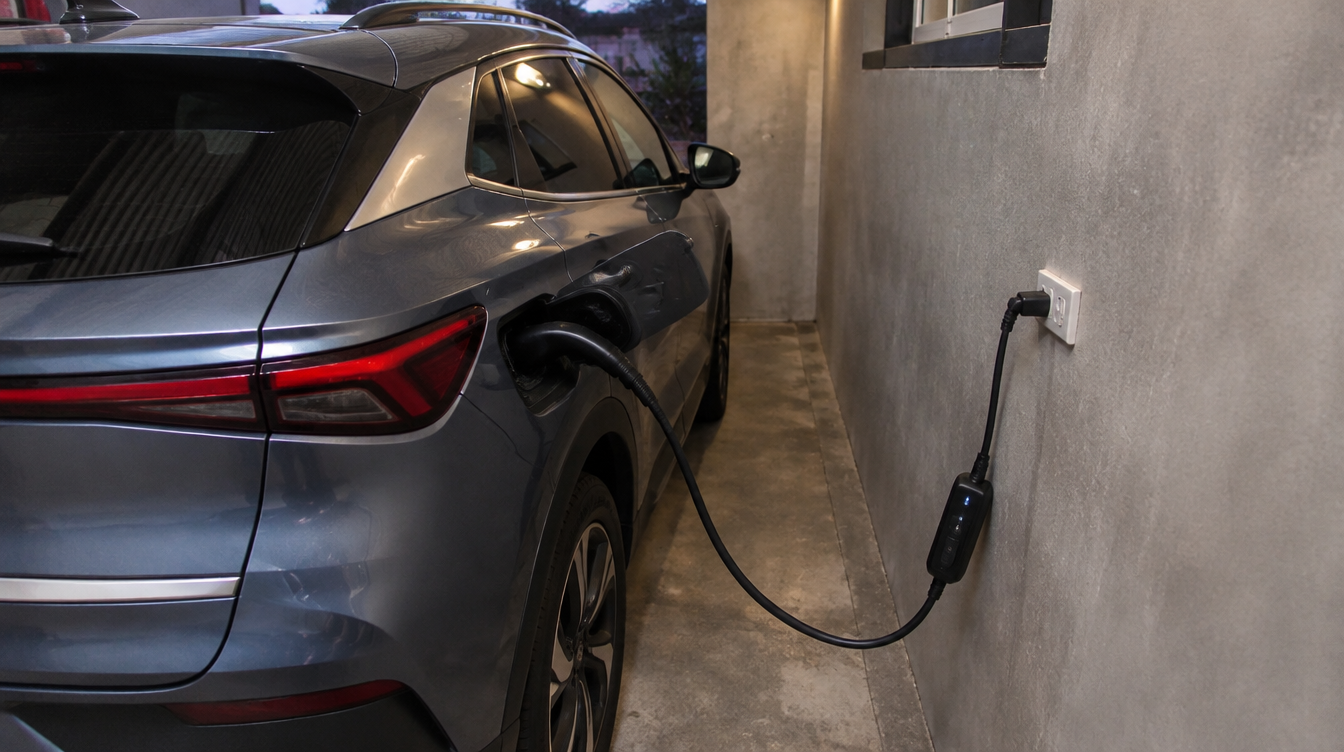
Every BYD can charge from a household outlet using the portable charging cable that comes with the car. It works, but it is a slow, long-running load, and many Philippine outlets are older two-prong types. This guide covers what to check about the outlet before you plug in.
BYDPH.org is an independent community and is not affiliated with BYD or its Philippine distributor. This is general information, not electrical advice. Follow your owner's manual and ask a licensed electrician about your own wiring.
The basics of Philippine household power
Residential outlets in the Philippines are commonly described as 220V at 60Hz. The most common outlet is the two-prong Type A, which has no grounding pin. Some homes and buildings also have Type B outlets, with a round grounding pin. Some sources round the voltage differently, so do not rely on the number alone. What matters for charging is that the socket is in good condition, grounded and on a circuit that can carry the load.
What BYD says about the socket
- BYD Cars Philippines says the portable charger plugs into a standard, grounded three-prong socket.
- The 2023 BYD Seal manual tells owners to connect the Mode 2 cable to an outlet that meets local standards, because high-power charging on a poor household socket can damage the line or cause tripping that affects other devices.
- BYD New Zealand's FAQ says to plug the 3-pin charger directly into the wall and not to use multiboards or extension cords while charging. That is a New Zealand source, so check your own manual too.
A plain reading of those points: use a grounded socket, plug in directly, and do not improvise.
Why a household outlet needs care
Charging draws a steady current for hours. For a sense of scale, a ZigWheels PH report on the Atto 3 launch says the portable charger delivers about 2.3 kW, taking roughly 15 to 21 hours to go from 10 to 80 percent, while the 7 kW home charger takes about five hours. A socket that is fine for a fan or a phone charger may not cope with that kind of sustained load if it is worn or loose.
Checking the socket before you charge
- Look at it. Do not use a socket that is cracked, loose, scorched, discolored or wet. The BYD manual also says to check the charging equipment for defects before charging.
- Is it grounded? A three-pin or Type B outlet with a grounding pin is the right match for the charger's plug. If the outlet is a two-prong, do not use a travel adapter or cut or bend a plug to make it fit. Ask an electrician to check or replace it.
- Plug in directly. The cable should reach the socket without an extension cord, power strip or adapter. If it does not reach, move the car or use a socket that is closer.
- Fully insert the plug. It should fit snugly. If it feels loose, do not use that socket.
- Check for heat. After a while, feel the plug and the wall plate. If either feels hot, or you smell burning, stop charging and have the outlet checked.
- Keep it dry and shaded. Keep the control box and the plug away from water, and follow the BYD manual's rain precautions.
What an electrician can check
For a socket you plan to use regularly, ask a licensed electrician to look at:
- whether the circuit and wire size suit a continuous load;
- whether the socket is properly grounded;
- whether the circuit has appropriate protection, such as a residual current device (RCD). Schneider Electric Philippines notes that one RCD should protect each charging point under IEC 61851;
- whether other appliances share the same circuit.
A contractor blog on EV charger installation in the Philippines says a wall charger should go on its own dedicated circuit with ground-fault protection, on plans prepared by a Professional Electrical Engineer. Confirm what applies to your home and building, and ask your condo or HOA about its rules.
When to consider a wall charger
The portable cable is best treated as a backup or an occasional option. A Type 2 wall charger gives faster charging and is installed on its own circuit. Expressway.ph, citing Meralco's EV Charging 101, puts a Level 2 home setup at roughly 50,000 pesos or more installed, so prices vary. Ask your dealer and a licensed electrician for current quotes.
Never do these
- Use an extension cord, adapter or power strip with the portable charger.
- Use a damaged cable, plug or socket.
- Bypass or tamper with any ground connection.
- Leave a hot plug or socket in use.
- Do any work on the car's high-voltage system yourself.
Owner experience
Some owners say they charge for years from a household outlet without trouble. That is one owner's experience and depends on their wiring. Yours may be different.
Last checked: 2 November 2026. Prices, codes and warranty terms change, so confirm with your dealer and a licensed electrician.
Where to learn more
- Teko.ph: types of electrical outlets in the Philippines
- BYD Cars Philippines: EV safety and security tips
- BYD Seal 2023 manual: Mode 2 charging cable (ManualsLib)
- ZigWheels PH: BYD Atto3 and its Blade Battery
- Go Flat Out: charging an EV in the Philippines
- Aedo Construction: EV charger installation in the Philippines
- Expressway.ph: Type 2 chargers in the Philippines
- BYD New Zealand FAQ
- Schneider Electric Philippines: RCD per charging point
Please read this as one informed perspective, not the final word. This article shares community research and experience. It may be incomplete or out of date, and it is not official guidance from BYD or its distributors. Before you act on it, check your owner's manual or an authorized service center, especially on safety, warranty and high-voltage matters.